Governance of Large Language Model Applications, Risks, and Ethics in Public Administration
Governance of Large Language model Applications, Risks, and Ethics in Public Administration
Session Overview
The rapid advancement and adoption of Large Language Models (LLMs) represent a paradigm shift with profound implications for all sectors, particularly public administration and governance. Government agencies manage massive volumes of data, policy documents, and public inquiries, making them prime candidates for the efficiency gains promised by generative AI. From automated document summarization and legal compliance to enhancing citizen service chatbots, LLMs offer unprecedented opportunities to modernize public service and improve evidence-based decision-making.
However, the integration of LLMs into the government sector introduces unique and critical challenges. Public sector use cases carry a heightened risk profile because they can affect fundamental rights, national security, and public trust. Key barriers include model hallucination, data privacy for sensitive citizen information, algorithmic bias, and the need for robust explainability and accountability.
The GLARE workshop provides a specialized venue for peer review and publication of high-impact research at the intersection of governance, large language models, applications, risks, and ethics. The workshop is dedicated to curating research that establishes public-service-tailored evaluation benchmarks and rigorous frameworks for ethical and legal governance of LLMs.
Submit your paper via Microsoft CMT. When selecting the subject area, choose:
Workshop-1: Governance of Large Language Model Applications, Risks, and Ethics in Public Administration
Submit PaperTopics of Interest
We invite original research, empirical case studies, and position papers addressing the following themes:
AI / Agentic AI Applications & Use Cases
- Citizen-centric services: advanced multi-modal interfaces, automated information retrieval, navigation systems, and related applications.
- Internal administration: intelligent document management, knowledge discovery, automated report summarization, and synthesis.
- National security: intelligence analysis and automated threat assessment.
- Empirical evidence: case studies on AI deployments in public administration.
Trust, Risk, & Security
- Factual integrity: mitigating hallucination to ensure accuracy in high-stakes contexts.
- Data sovereignty: security architectures for classified or sensitive data.
- System robustness: defending against adversarial attacks and prompt injections.
- Validation: red-teaming methods and rigorous safety evaluations.
Ethics & Legal Governance
- Regulatory alignment: AI governance frameworks and emerging public sector mandates.
- Algorithmic fairness: audit and mitigation strategies for bias in public service delivery.
- Explainable AI: transparency in government decision-support systems.
- Accountability: liability and responsibility for AI-mediated outcomes in public administration.
Design & Infrastructure
- Domain specialization: fine-tuning Gov-LLMs on restricted or sovereign datasets.
- Hybrid architectures: balancing on-premise and cloud deployments for security.
- Evaluation standards: specialized benchmarks and performance metrics for government.
- Sustainability: cost-efficient scaling and computational resource management.
Review and Publication
- All submitted papers will undergo a rigorous peer review process by at least two expert reviewers from the Technical Program Committee.
- Acceptance decisions will be based on technical quality, novelty, and relevance to the workshop scope.
- Accepted papers will be submitted for inclusion in IEEE Xplore, following the standard AIBThings-2026 procedure, subject to meeting IEEE Xplore's scope and quality requirements.
Workshop Co-Chairs
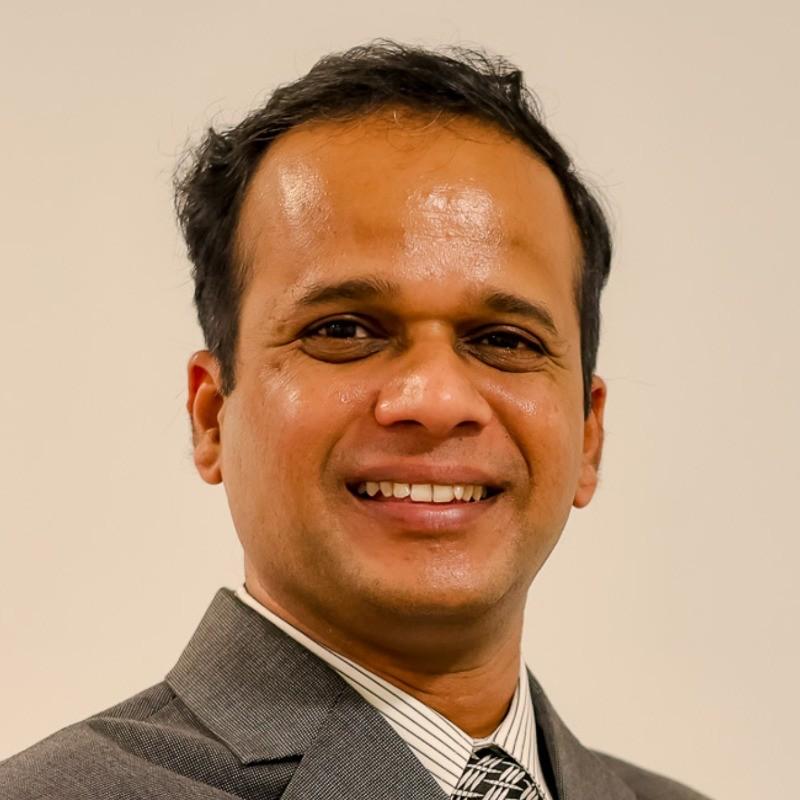
Chandrashekar Konda
Technical Director (AI), Oracle, USA

Robert Golan
Information/AI Architect, DBmind Technologies, USA
Technical Program Committee
- Xi Chen, Director of the Artificial Intelligence, State Grid Corporation of China, China
- Douglas Lange, Distinguished Scientist for Machine Learning and Artificial Intelligence, Naval Information Warfare Center Pacific, USA
- Dr. P. Karthikeyan, Professor, Thiagarajar College of Engineering, Madurai, India
- Dr. A M Abhirami, Professor, Thiagarajar College of Engineering, Madurai, India
- Dr. Megha Arakeri, Professor & Associate Dean, Manipal Institute of Technology, Bengaluru, India
- Dr. Faezah Fallah, Research Scientist, University Stuttgart, Germany
- Dr. Sashi Kumar, Director Data Science, Tranzact, USA
- Dr. Aleš Zamuda, Associate Professor, University of Maribor, Slovenia
- Ambarish Natu, IT Architect, Australian Government
- Dr. Lobna Said, Professor, Nile University, Egypt
- Dr. Uzay Kamak, Professor, Eindhoven University of Technology, Netherlands
- Dr. Vyacheslav Romanov, Research Physical Scientist, US Department of Energy/NETL, USA